Language

time: 2026-03-13
1. What Is GSM In Fabrics?
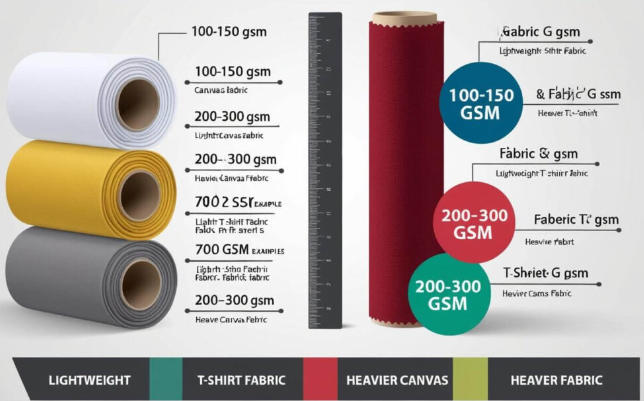
GSM stands for grams per square meter and is a standard measurement used to indicate the weight of a fabric. Simply put,
GSM shows how much one square meter of fabric weighs, helping you understand whether a fabric is light, medium, or heavy.
The higher the GSM, the thicker and heavier the fabric feels; the lower the GSM, the lighter and more breathable it is. For example,
lightweight T-shirts usually have a lower GSM, while hoodies, sweatshirts, or winter garments use fabrics with a higher GSM.
2. How to Measure GSM in Fabrics?
GSM in fabrics is measured by calculating the weight of a specific fabric area and converting it to grams per square meter. In practice,
manufacturers usually cut a fabric sample using a standard GSM cutter (often a circular cutter with a fixed area), then weigh the sample
on a precision scale. The measured weight is multiplied by a fixed factor to determine the GSM value. This method ensures accurate and
consistent results, allowing brands and manufacturers to compare fabric weights, control quality, and maintain consistency across different
production batches.
3. Fabric GSM Ranges and Typical Uses
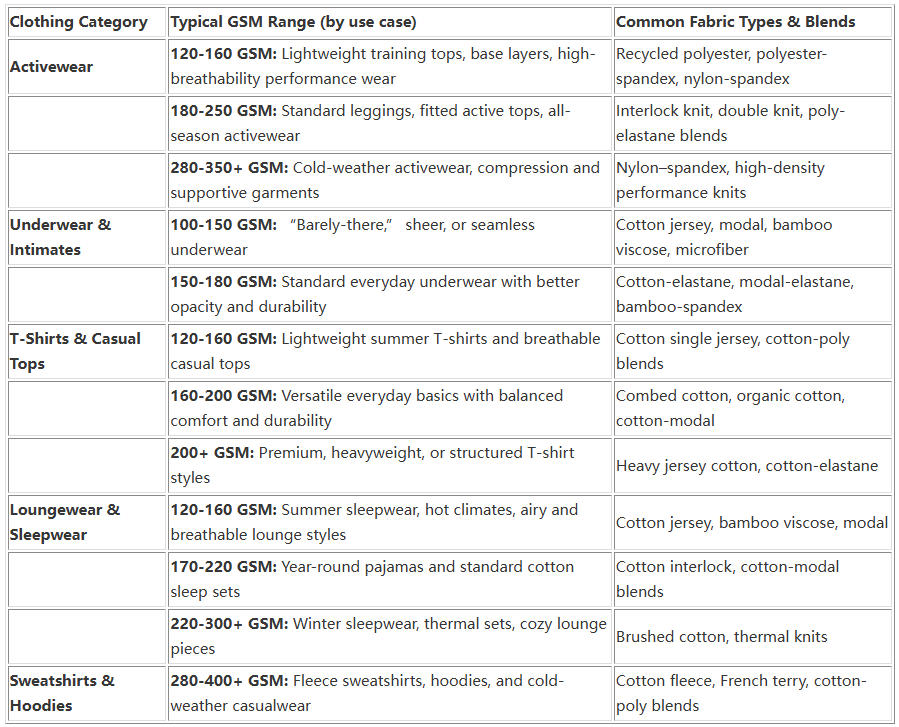
Each product type is typically developed within a specific GSM range to balance comfort, durability, breathability, and structure. The table below breaks down typical GSM ranges by clothing category, linking each GSM level to its most common applications while also highlighting widely used fabric types and blends.
4. How Fabric Weight Impacts Product Performance
Fabric weight directly affects how a garment feels, performs, and lasts in real-life use. From breathability and comfort to durability and structure, GSM plays a key role in determining overall product performance.
Comfort & Wearability: Fabric weight directly affects how a garment feels on the body. Lightweight fabrics allow more airflow and feel cooler,
making them suitable for warm climates or high-movement activities. Heavier fabrics tend to feel warmer and more substantial,
which can be desirable for colder conditions or structured garments.
Breathability & Moisture Management: Lower GSM fabrics generally offer better breathability and faster moisture evaporation,
which is especially important for activewear and summer garments. Higher GSM fabrics may retain more heat and moisture,
making them better suited for low-intensity use or cooler environments.
Drape & Garment Structure: GSM plays a key role in how a fabric hangs and holds its shape. Lightweight fabrics create a soft, fluid drape,
while heavier fabrics provide more structure and firmness. This directly influences pattern design, fit, and the overall silhouette of a garment.
Durability: Heavier fabrics often have higher resistance to wear, abrasion, and repeated washing. While lightweight fabrics can still be durable
when well-constructed, GSM is an important factor in determining how long a garment will maintain its appearance and performance over time.
Intended Use & Performance Requirements: Different activities place different demands on fabric weight. High-intensity sports typically
require lighter fabrics for mobility and ventilation, while casual wear, uniforms, or outerwear may benefit from heavier fabrics that offer stability
and protection.

5. Things to Consider When Deciding GSM in Fabrics When deciding on the right GSM (grams per square meter) for a fabric, several key factors determine how the finished garment will perform in terms of comfort, durability, and overall functionality. Here are the main considerations: End Use and Application: The intended use of the fabric is the primary factor in choosing GSM. Lightweight fabrics (<150 GSM) are ideal for breezy summer shirts, delicate blouses, scarves, and underwear. Medium-weight fabrics (150-350 GSM) are versatile for everyday T-shirts, casual shirts, dresses, and light denim. Heavyweight fabrics (350+ GSM) are best for winter coats, jackets, structured denim, upholstery, and hoodies. Seasonality and Climate: GSM should be selected based on the environment where the garment will be worn. Low GSM (100-150) works best for warm climates and summer wear for breathability and sweat-wicking. High GSM (200+ for tops, 350+ for outerwear) is necessary in cold climates to provide insulation. Mid-weight fabrics (150-200 GSM) are ideal for transitional seasons and layering. Desired Durability and Structure: Higher GSM generally results in a denser, stronger fabric that resists tearing, pilling, and wear, suitable for garments that need to hold a specific shape, like structured blazers or sturdy workwear. Lower GSM fabrics are softer and lighter but less suitable for high-abrasion applications. Fabric Hand Feel and Drape: Low-GSM fabrics drape loosely and feel soft and light, while high-GSM fabrics provide more structure and a stiffer, more tailored feel. The choice of GSM directly affects the comfort and movement of the garment. Opacity: Fabric weight influences transparency. Lightweight fabrics with low GSM are often semi-sheer or sheer, while higher GSM fabrics are necessary to create opaque garments such as white T-shirts or dresses. Cost and Manufacturing: Higher GSM fabrics typically use more raw material, increasing cost per meter or yard. They may also require different handling during production compared to lightweight fabrics, affecting sewing, cutting, and overall manufacturing efficiency.
 Next:None